How to identify crystals: a beginner’s guide
To identify an unfamiliar crystal, compare several clues: its crystal shape, luster, transparency, and hardness, as well as its color. A photograph can suggest a candidate, but color alone is not enough to confirm an identity. Start with observation, then check the properties that distinguish the lookalikes.
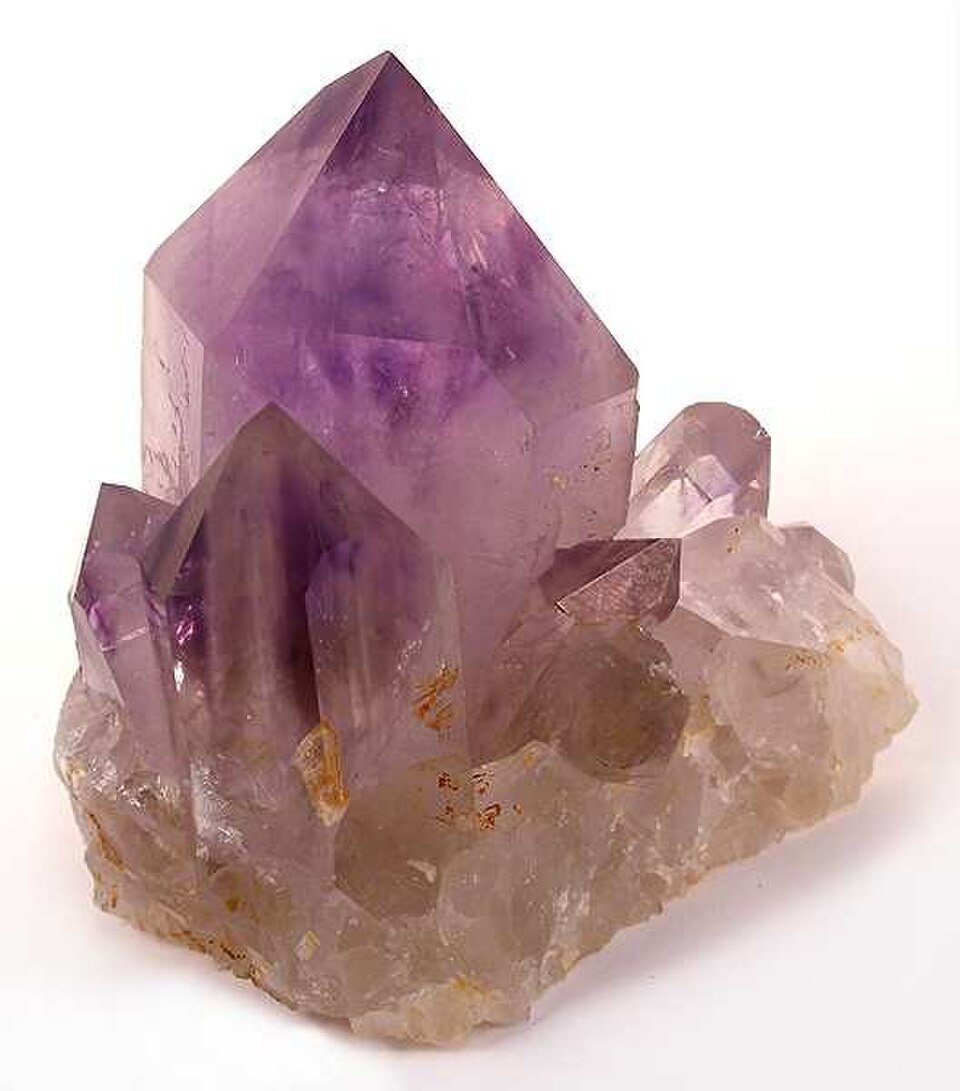
1. Record color, luster, and transparency
Examine the specimen in daylight against a plain background. Turn it over and look at both fresh and weathered surfaces. Write down its color, whether light passes through it, and whether the surface looks glassy, metallic, pearly, or dull. A hand lens can reveal features that are easy to miss in a photograph.
Take several sharp photographs, including the whole specimen and a close-up of any crystal faces. Include a scale in one image, and record where the specimen came from if you know. Natural shape is useful evidence; polishing and tumbling can remove it. An inherited or purchased stone may have no reliable locality, so leave that clue unknown rather than guessing.
2. Compare crystal shape and broken surfaces
A natural crystal’s external form reflects its internal structure, but not every specimen develops clean faces. Quartz often forms six-sided prisms with pointed ends. Broken quartz can show curved, shell-like fracture surfaces. Avoid treating one attractive point as proof: manufactured glass can also be cut into a pointed shape.
Cleavage is a mineral’s tendency to split along particular planes. It differs from the flat faces that grew on the outside of a crystal. Calcite and fluorite have characteristic cleavage, while quartz does not. Observe existing breaks; do not break a specimen simply to inspect it. When a polished object hides these clues, a confident identification may require a gemologist’s instruments.
3. Compare amethyst, fluorite, and other lookalikes
Purple does not automatically mean amethyst. Color is a starting point, and hardness or natural structure can help separate some possibilities. The table gives reference properties for mineral species; it cannot diagnose an individual stone or distinguish every imitation.
| Candidate | Useful clue | Mohs hardness |
|---|---|---|
| Amethyst (quartz) | Purple variety of quartz; natural points may show six-sided prisms | 7 |
| Fluorite | Many colors; natural crystals can be cubic | 4 |
| Calcite | Many colors; prominent cleavage | 3 |
| Gypsum | Soft; may be clear, white, fibrous, or tabular | 2 |
References: GIA: amethyst is quartz with Mohs hardness 7; NPS: reference mineral hardness values.
4. Use hardness carefully
Mohs hardness compares resistance to scratching. It is not a measure of how difficult a crystal is to break. A scratch test can damage a collectible or a polished gem, so skip it on jewelry, valuable specimens, and anything you do not own. Do not grind, taste, heat, or apply acids to an unknown mineral.
If an inconspicuous test is appropriate, use a known reference material and very light pressure. Wipe away any powder and check for a real groove; a streak of transferred material is not necessarily a scratch. Results can vary across a mixed rock or an altered surface, and an uncertain test should remain uncertain.
5. What crystal is this? Use photos as a starting point
Gem & Rock Identifier lets you submit a specimen photo, explore the suggested identification and geological information, and save the find in your collection. Compare the suggestion with the observable properties you recorded. A useful next step is to ask which alternative could look similar and what observation would separate the two.
The USGS explains that rocks and minerals are extremely difficult to identify from photographs and often need in-person examination. For a stone’s authenticity, treatment, origin, or financial value, consult a qualified gemologist or appropriate laboratory. Keep the photo, locality, and observations together so an expert has more evidence to work with.
References: USGS: limits of identifying a rock or mineral from photos.
A crystal identification worksheet
Use this template alongside your specimen photos. Keep an observation separate from a possible identity: ‘purple and transparent’ is something you can see; ‘amethyst’ is a candidate to check. Leave an unavailable clue blank, and record a skipped test as ‘not tested’ rather than filling in the expected result for your favorite candidate.
| Clue | What to record | Limit to remember |
|---|---|---|
| Appearance | Color in daylight, luster, and transparency | Several minerals share a color |
| Shape | Natural faces and existing broken surfaces | Cutting or tumbling can remove useful clues |
| Hardness, if tested | The reference used and whether a permanent groove formed | Tests can damage a specimen; an uncertain result is not a number |
| Locality | Where it was found, or ‘unknown’ | A seller’s label is not proof of origin |
| Candidate and alternative | A possible identity, a lookalike, and the clue needed to separate them | A photo suggestion is not a confirmed identification |
Crystal identification questions
Can I identify a tumbled crystal by color alone?
Color alone cannot confirm an identity. Tumbling removes natural faces and can make lookalikes harder to separate, while dyes or treatments may alter appearance. Record the clues that remain and leave the identity uncertain if they do not distinguish the candidates. Compare natural shape and broken surfaces →
How can I tell amethyst from purple fluorite?
Amethyst is quartz with Mohs hardness 7; fluorite has hardness 4. Natural quartz points may show six-sided prisms, while fluorite can form cubes, but color or a polished shape is not enough to confirm either mineral. Scratch testing can damage a specimen, so avoid it on jewelry and valuable pieces. Check the limits before testing hardness →
Sources & editorial note
Prepared with AI assistance for Rock Mineral ID, published by İlker Beri, the app developer. This educational guide draws on the references below and has not been independently reviewed by a geologist. Photo identification and simple field tests cannot replace expert examination.